Loading...
Advanced Woonsocket Concrete has served Cranston homeowners with decorative concrete installation, driveway replacement, patio construction, concrete steps, and foundation work since 2017. We work across every Cranston neighborhood - from the older homes in Edgewood near the water to the postwar ranches and colonials in Auburn and Oaklawn - and we understand what decades of New England winters do to concrete on homes built in the 1940s and 1950s.
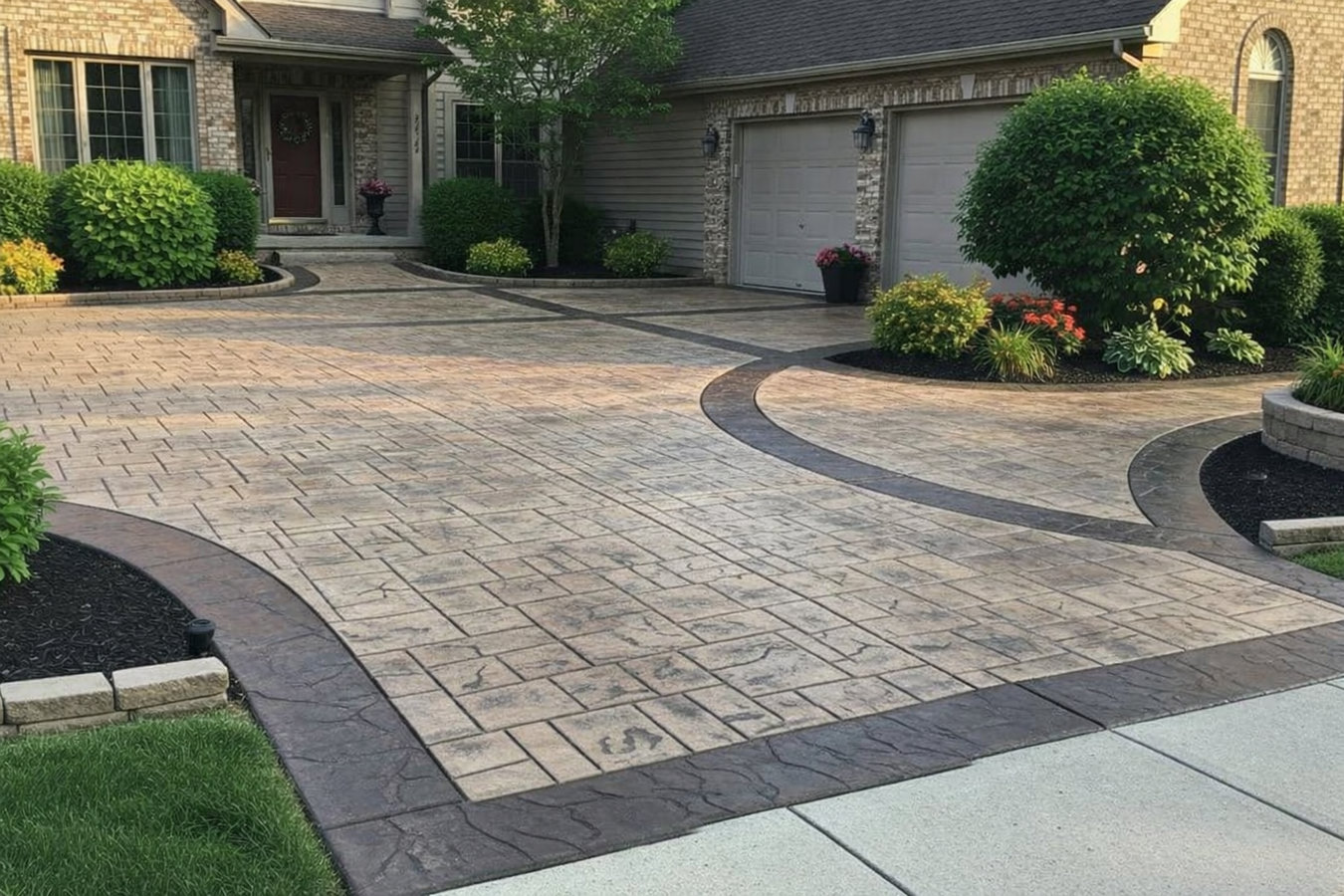
Cranston homeowners who have owned their property for 20 or more years often reach a point where the driveway and patio surfaces are structurally ready for replacement but also ripe for an upgrade. Decorative concrete - stamped patterns, integral color, or stained finishes - lets you replace aging concrete with something that looks like stone or brick without the maintenance cost of those materials. It also seals the surface properly for the freeze-thaw winters Cranston gets every year. Learn more about our decorative concrete options.
Most driveways in Cranston were poured in the 1950s and 1960s with minimal reinforcement and shallow bases that were not built to last 70-plus winters. When a Cranston driveway starts heaving sections and accumulating cracks faster than they can be filled, full replacement is usually the right call. We remove the old slab, properly compact and grade a new base, and install reinforced concrete sized for Rhode Island weather.
Cranston yards tend to be larger than in neighboring Providence, which makes patio projects more practical here. Whether the existing slab is cracked and heaved or you want a patio where there was none, we design the layout to drain water away from the house foundation, pour a properly reinforced slab, and finish it to hold up through freeze-thaw winters. Decorative options like stamped surfaces are popular in Cranston neighborhoods like Edgewood and Garden City.
Colonial and Cape Cod homes throughout Cranston - especially in Knightsville and Auburn - have front entry steps that have cracked, separated from the foundation, or settled unevenly after decades of freeze-thaw stress. A step that tilts, crumbles underfoot, or has pulled away from the house is a safety problem, not just an aesthetic one. We remove failing steps and pour properly anchored replacements graded to direct water away from the entry.
Parts of Cranston near the Pawtuxet River and its tributaries sit on lower ground where water moves slowly after heavy rain and soil can shift over time. Properties with sloped rear yards or side slopes benefit from a properly built concrete retaining wall that stops soil movement, protects adjacent structures, and creates level usable space. We engineer wall thickness and reinforcement to match the actual soil and water load.
When Cranston homeowners add a garage, sunroom, or workshop, a concrete slab foundation is typically the starting point. The postwar ranch and split-level homes common throughout Auburn and Oaklawn often have detached garages with aging slab foundations that have shifted over the years - sometimes enough to make the garage door no longer square. We pour new slabs and replace failing ones with proper base depth and drainage for the local soil conditions.
The majority of Cranston homes were built between the late 1940s and the mid-1960s, during the postwar suburban expansion that brought families out of Providence into a quieter residential city. That wave of construction gave Cranston its defining character - neighborhoods of Colonial, Cape Cod, and ranch-style homes on modest lots, owner-occupied for decades by families who take care of their properties. It also means that most of the concrete in Cranston is now 60 to 80 years old. Driveways, walkways, and garage slabs from that era were built to different standards than what we use today, with shallower bases and less reinforcement than Rhode Island winters demand. Cranston homeowners who have been patching the same driveway for 15 years are often at the point where replacement is both more cost-effective and more permanent than continuing to fill cracks.
Cranston gets 30 to 35 inches of snow per year, and the freeze-thaw cycle runs from December through March - with additional swings in late fall and early spring that are often worse than winter itself for concrete. The Pawtuxet River and several smaller waterways run through the city, and low-lying areas near them see slower drainage and periodic flooding during heavy spring rains, which accelerates foundation movement and base erosion under concrete slabs. The waterfront homes in Edgewood face an additional challenge: salt air and moisture exposure off Narragansett Bay and Pawtuxet Cove wear on older materials faster than the same materials fare inland. A concrete contractor who works in Cranston regularly understands all of these variables and accounts for them in base preparation and mix selection.
Our crew works throughout Cranston regularly, and we understand the local conditions that affect concrete contractor work here. When a project requires permits - for foundation work, new retaining walls, or structural concrete - we submit to the City of Cranston Building and Zoning Division and manage the inspection process so homeowners do not have to. We know what Cranston inspectors look for on concrete work and make sure every project is compliant before the pour.
Cranston is a city of distinct neighborhoods, and each one has a slightly different character. Edgewood along the waterfront has older homes - some dating to the late 1800s - with larger lots and architectural details that require careful work around historic exteriors. Knightsville and Auburn have the tight two-families and colonials from the 1940s and 1950s that make up the bulk of Cranston concrete calls. The Garden City area has its own mix of postwar ranches and newer commercial development along Midway Road. The historic Pawtuxet Village on the Cranston-Warwick border is one of the oldest communities in Rhode Island, with waterfront properties that see the most moisture-related wear.
Cranston borders Providence, RI to the north, and we move between the two cities regularly - the concrete challenges in both are similar, but Providence's older housing stock and denser lots mean the work is generally more complex there. We also serve homeowners in North Providence, RI, which borders Cranston to the northwest and has a comparable mix of mid-century homes on established residential streets.
Reach out by phone or through the contact form and we will get back to you within 1 business day. We will ask a few quick questions about your Cranston address and the work you need so we are prepared for the site visit.
We come to your Cranston property and assess the existing conditions - base, drainage, and access - before quoting anything. You get a written estimate with clear line items, including an honest conversation about whether your existing concrete is repairable or ready to be replaced. No pressure, no upsell.
We pull any permits required for your Cranston project and schedule work when the forecast is dry and temperatures are in the right range for proper curing. Most residential jobs are completed in one to two days of active work.
After the pour, we walk you through the curing timeline specific to your project and the weather - generally 24 to 48 hours for foot traffic and 7 days for vehicle use on driveways. We clean up the site and stay reachable if you have any questions after the job is done.
We work across every Cranston neighborhood - call us or fill out the form and we will get back to you within 1 business day with a no-pressure estimate.
(401) 356-6720Cranston is Rhode Island's third-largest city, with about 82,000 residents spread across roughly 29 square miles south of Providence. It is predominantly a residential city - most of its land is taken up by established neighborhoods rather than dense commercial corridors. The housing stock reflects its postwar growth: Colonial, Cape Cod, and ranch homes built in the 1940s, 1950s, and 1960s are the most common types, though the Edgewood neighborhood along Pawtuxet Cove has older, larger homes dating to the late 1800s with more architectural detail than is typical elsewhere in the city. About 60 percent of Cranston housing is owner-occupied - a notably high rate that reflects the long-term investment most residents have in their properties. Homeowners here tend to maintain their houses, and demand for concrete repair and replacement work comes steadily from owners who have watched the same driveway deteriorate for a decade and finally decide to address it properly.
The Pawtuxet Village neighborhood on the Cranston-Warwick border is one of the oldest in Rhode Island, known for its colonial-era buildings along the river and the annual Gaspee Days festival celebrating a landmark event in early American history. The Pawtuxet River runs through the southern part of Cranston and has caused flooding in low-lying areas during major rain events - a reality that makes foundation drainage and proper concrete grading especially important near waterways. Cranston neighbors several communities we serve: to the north is Providence, RI, where the older housing and denser lots create a different but related set of concrete challenges, and to the east is Pawtucket, RI, another city with aging housing stock and steady concrete work.
Get a durable, professionally poured concrete driveway built to last.
Learn MoreAdd beauty and texture with decorative stamped concrete surfaces.
Learn MoreSafe, level concrete sidewalks installed for homes and businesses.
Learn MoreStructurally sound retaining walls that control erosion and grade.
Learn MoreProfessionally installed concrete floors for any interior space.
Learn MoreSturdy concrete steps crafted for curb appeal and daily durability.
Learn MoreSolid slab foundations poured with precision for lasting stability.
Learn MoreDurable concrete parking lots designed for heavy, long-term use.
Learn MoreFrom Edgewood to Oaklawn, we serve every Cranston neighborhood. Call or fill out the form and get a straight answer on your driveway, patio, steps, or foundation project.