Loading...
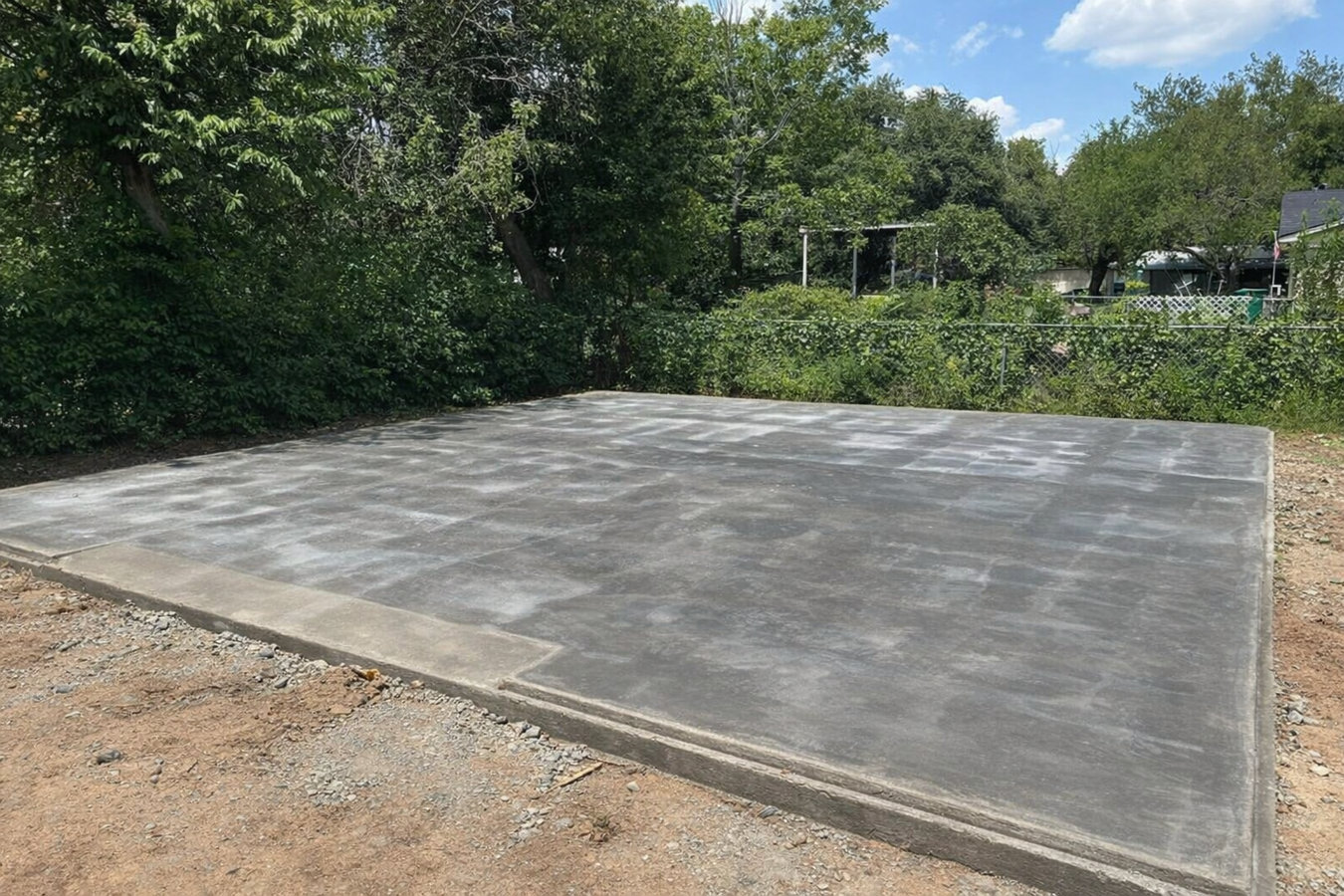
A slab that heaves, cracks, or settles puts everything built on top of it at risk. We pour slab foundations in Woonsocket with footings deep enough for Rhode Island winters and a base that handles the area's clay-heavy soils.
Slab foundation building in Woonsocket involves excavating and grading the site, compacting a gravel base, laying a moisture barrier, setting forms and steel reinforcement, pouring the concrete, and finishing the surface - most residential slabs take one to three days of active work, with about a week before anything heavy can be placed on the new slab.
Most slab work in Woonsocket is tied to additions and detached garages, not ground-up new construction. The city has a lot of older housing stock where homeowners are adding usable space rather than building from scratch. That means the new slab has to sit correctly in relation to the existing home - proper grading so water drains away, and footings that go deep enough to handle Rhode Island winters without heaving. When a new addition also needs steps or other entry features, we coordinate that work with our concrete steps construction service so both components are built together and finished to the same standard.
Before any concrete is poured, the ground underneath must be leveled, compacted, and covered with a layer of gravel and a moisture barrier. Skipping or rushing this preparation is the most common reason slabs settle unevenly or develop moisture problems years after installation. We take base preparation as seriously as the pour itself.
If you want to add a room, a garage, or a sunroom to your Woonsocket home, you almost certainly need a slab foundation before any framing can begin. The existing foundation of your home does not extend to the new footprint. This is one of the most common reasons homeowners in older Woonsocket neighborhoods call a concrete contractor.
Small hairline cracks in concrete are common and usually not serious. But cracks wider than a quarter inch, or sections of floor that have shifted so one side is noticeably higher than the other, signal that the slab has moved due to soil settling or frost heave. In Woonsocket's freeze-thaw climate, this kind of movement happens in slabs that were not built with adequate footings. A contractor can assess whether repair or replacement is the right answer.
If you knock on your concrete floor and hear a hollow sound, or if a section feels slightly springy, the soil underneath may have washed away or settled, leaving a void. This can happen in Woonsocket's clay-heavy soils after a wet season, when water moves through the ground and carries fine particles with it. Left alone, a void under a slab can lead to a collapse of that section.
If a room on the ground floor always feels damp, smells musty, or shows signs of moisture under rugs or flooring, the slab beneath may be missing or have a failed moisture barrier. Woonsocket's wet springs and clay soils mean ground moisture has nowhere to go except up through a slab that is not properly sealed. Addressing this often means removing flooring and treating or replacing the slab.
We pour slab foundations for residential additions, detached garages, workshops, sunrooms, and accessory structures throughout Woonsocket and the surrounding communities. Every slab starts with a site assessment to understand the soil conditions, the slope of the ground, and any drainage considerations before we quote the work. If your addition also needs a full foundation with basement walls rather than a simple slab, we can walk you through your options alongside our foundation installation service so you understand what each approach costs and when each one is the right fit. For projects where the slab needs to carry specific point loads - like a post from a deck or an outdoor structure - we also build the concrete footings that transfer that weight safely into the ground.
All of our slab work includes ground preparation, a compacted gravel base, a polyethylene moisture barrier, steel reinforcement, and a smooth-finished surface ready for framing or flooring. We handle the permit application with the Woonsocket Building Department and coordinate the pre-pour inspection so nothing delays the pour date. The permit process, the reinforcement inspection, and the final closeout are part of the job - not extras you have to manage yourself.
Right for homeowners expanding living space - a bedroom, family room, or sunroom addition where the new section needs its own concrete base.
Built to handle vehicle weight, tool storage, and the temperature swings of an unheated structure through Rhode Island winters.
For sheds, workshops, and accessory structures where a stable, level floor makes the space genuinely usable year-round.
For existing slabs that have shifted, cracked through, or developed moisture problems - we assess whether repair or full replacement is the better investment.
Woonsocket sits in a climate zone where the ground freezes hard every winter and thaws every spring - sometimes multiple times in a single week. When water in the soil freezes, it expands and can push a slab upward. When it thaws, the ground settles back. To prevent this, the thickened footing edges of your slab must extend below the frost line, which sits at roughly 48 inches in northern Rhode Island. A contractor who does not account for local frost depth is building a slab that will heave and crack within a few winters. The work we do for homeowners in North Smithfield follows the same depth requirements, because both communities sit in the same climate zone and face the same risks.
Much of the Woonsocket area also has soils with significant clay content. Clay holds water rather than draining it, which means the ground under a slab can stay saturated for extended periods after rain or snowmelt. This makes proper gravel base preparation and moisture barrier installation especially important here - more so than in areas with sandy or loamy soils. Homeowners in Cumberland face similar soil conditions, and we approach both communities with the same attention to base prep. Woonsocket's construction season is also shorter than many homeowners expect - ideal pouring conditions run from roughly late April through October, so booking early in the season is the practical way to avoid a summer scheduling crunch.
The first conversation covers what you are building, roughly where on your property, and your general timeline. We schedule a site visit before giving you any numbers, because actual soil conditions, yard slope, and equipment access all affect the price. Expect this visit to take 30 to 60 minutes.
After the site visit, you receive a written estimate that breaks down materials, labor, and site preparation. Once you move forward, we pull the required building permit from the Woonsocket Building Department before any work begins. Allow one to two weeks for permit review - we keep you updated.
The crew excavates, grades, and compacts the gravel base across the full footprint. Any underground plumbing is installed and inspected at this stage. A city inspector visits to confirm the forms and steel reinforcement are set correctly before the concrete truck arrives.
The actual pour usually happens in a single day. The crew works quickly to fill the forms, spread the concrete, and finish the surface. Plan for the area to be off-limits for at least a week after the pour - foot traffic is fine after three to five days, but nothing heavy until full strength is reached at about 28 days.
Free on-site estimates. Written quote before any work begins. Permits handled for you.
(401) 356-6720We set every slab footing below the 48-inch frost line that applies to northern Rhode Island. That is the single most important factor in whether a slab stays level through Woonsocket winters. Contractors who cut corners on footing depth produce slabs that heave within a few years - ours do not.
We handle the permit application, coordinate the pre-pour inspection with the Woonsocket Building Department, and close out the permit when the job is done. You get a complete inspection record to keep on file - useful if you ever sell the home or pull a future permit. A contractor who skips permits is putting your investment at risk.
Every project starts with a written estimate that covers site prep, materials, labor, and permit fees - before you commit to anything. Rhode Island Association of Building Officials compliance is part of our standard process, not an upsell. You see exactly what you are paying for and why before work begins.
Woonsocket's clay-heavy soils hold water, and a slab poured over poorly prepared ground will settle unevenly over time. We take base preparation seriously - proper grading, compaction, and a correctly installed moisture barrier - so moisture has somewhere to go other than up through your floor. This is a local condition many out-of-area contractors underestimate.
We have been building slab foundations in Woonsocket and the surrounding communities since 2017. The combination of permit-backed work, frost-depth footings, and proper base preparation is what separates a slab that lasts decades from one that needs attention within a few years. American Concrete Institute standards guide our reinforcement and curing practices on every job.
Full foundation installation for homes and additions that need basement walls, waterproofing, and a complete structural base below grade.
Learn MoreIndividual concrete footings for decks, posts, and structural columns that need a stable load-bearing point below the frost line.
Learn MorePermit season and the summer construction window fill up fast - call now to lock in your spot and get a free written estimate before the schedule closes.