Loading...
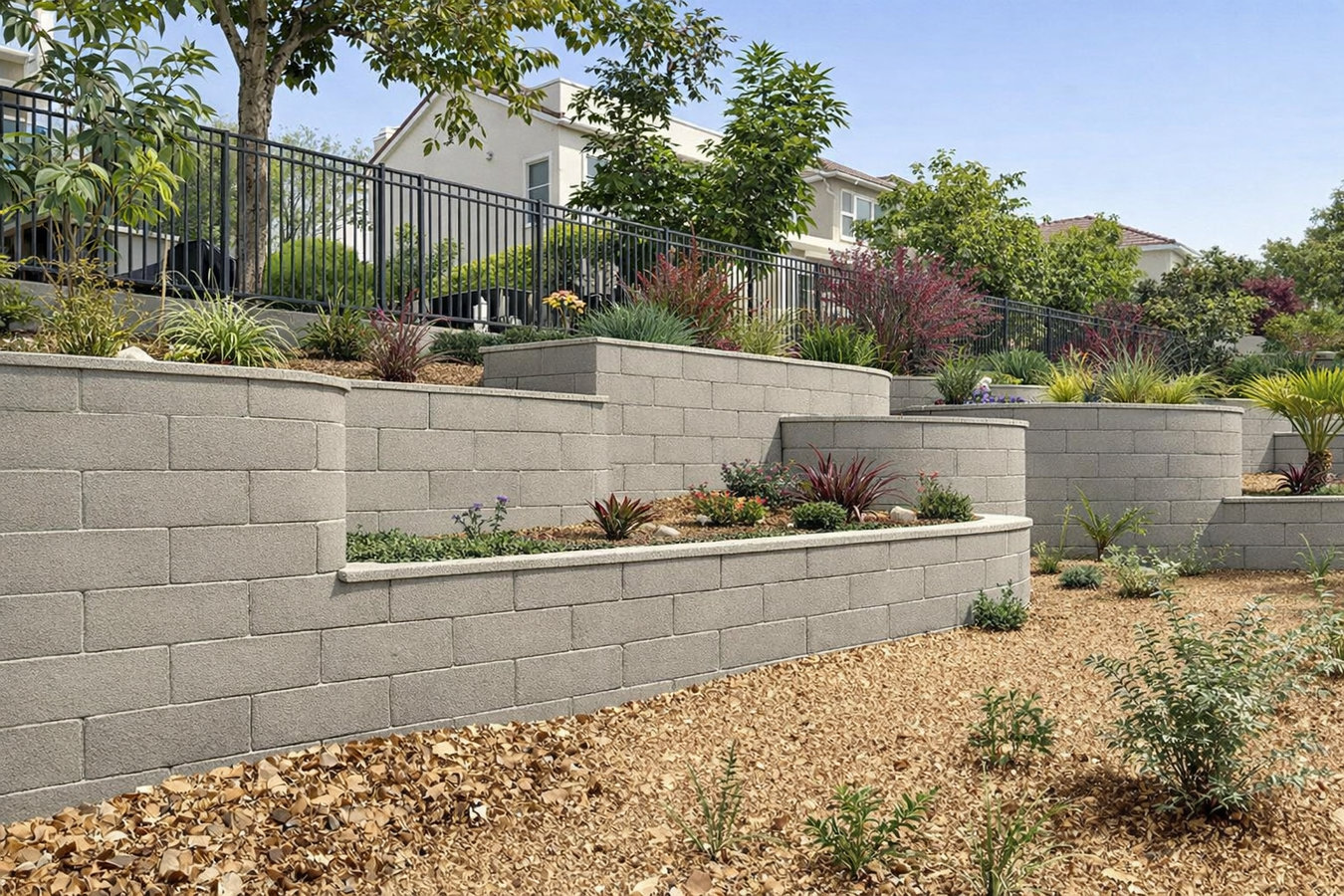
Your yard is washing away, your slope keeps shifting, or your foundation is at risk. A properly built concrete retaining wall solves the problem and stays solid for decades.
Concrete retaining walls in Woonsocket hold back soil on sloped or uneven properties, prevent erosion, and create usable flat space where a hillside used to be. Most residential projects take three to five working days from excavation to cleanup.
Woonsocket sits in the Blackstone River valley, which means a lot of the city's residential land is genuinely steep - not just gently rolling. Retaining walls here are often structural necessities, not cosmetic choices. Water pressure from spring snowmelt and heavy rain puts serious stress on any slope without proper support. If your yard is washing away or you want to create a level patio or garden area, a concrete retaining wall is the right starting point. Many homeowners also find that the same project that solves erosion also ties naturally into concrete floor installation work when they're updating an adjacent basement or outdoor space.
After a heavy rain, if you notice channels carved into a hillside or soil collecting at the bottom of a slope where it did not used to be, erosion is actively happening. Woonsocket's spring rains and snowmelt accelerate this on any unprotected slope. Left alone, it gets worse every season.
If rainwater or snowmelt runs downhill and collects against your foundation rather than draining away from it, your grading is working against you. Over time, this causes basement moisture problems and foundation damage. This is a particularly common issue in Woonsocket's older neighborhoods where original grading was never corrected.
A retaining wall that has started to tilt away from the slope it holds back is under stress it can no longer manage. Horizontal cracks near the middle of a wall or a noticeable outward bow are signs the wall may be close to failing. This is a safety concern, not just a cosmetic issue.
Many Woonsocket properties have yards that are too steep to use comfortably for a patio, garden, or play area. A retaining wall lets you cut into the slope and create a level terrace, adding usable outdoor space. If you have been looking at a hillside and wishing you could actually use it, a retaining wall is usually the first step.
We install both poured concrete walls and segmental concrete block walls, and the right choice depends on your slope height, the soil behind it, and your budget. Poured concrete is cast in one solid piece, making it stronger for taller applications. Segmental block walls are assembled from interlocking units and are a good fit for lower walls or situations where a stepped, terraced look suits the property. Either way, every wall we build includes proper gravel backfill and a drainage pipe - those are not extras, they are what separates a wall that lasts from one that fails. For properties with significant grade changes, we sometimes recommend a tiered wall design rather than one tall single wall.
Beyond the wall itself, many homeowners find that solving the retaining wall problem opens up adjacent projects. If you are adding a flat terrace, that often connects to concrete steps construction to link different levels of the yard. And if you are updating your yard more broadly, pairing the retaining wall project with concrete floor installation for a patio or basement area is a natural combination.
Best for taller walls and situations requiring maximum strength - cast in one piece for a solid, uniform structure.
A good fit for lower walls or tiered designs - interlocking units create a clean look without requiring forms or mortar.
Ideal for steep slopes where one tall wall is not the safest or most cost-effective solution - multiple shorter walls step the grade down gradually.
Every wall we build includes gravel backfill and a drainage pipe - essential in Rhode Island's wet climate to prevent water pressure buildup.
Woonsocket's location in the Blackstone River valley means much of the city's residential land is genuinely sloped - steeply terraced in many neighborhoods rather than gently rolling. Combine that topography with Rhode Island's roughly 47 inches of annual precipitation, concentrated spring snowmelt, and a frost line of nearly four feet, and you have conditions that put real stress on any unprotected slope. Retaining walls here are not decorative choices. They are functional structures that keep soil in place, protect foundations from water pressure, and turn unusable hillsides into actual yard space. Much of the housing stock was built in the late 19th and early 20th centuries, when grading and drainage standards were far less rigorous than today. Many older properties have yards that slope toward the foundation, and retaining walls are often needed to correct decades of soil movement.
We serve the full Woonsocket area, including homeowners in North Smithfield where hilly terrain creates similar challenges, and in Cumberland where older properties face the same erosion and grading issues common throughout the region. The permit requirements at the Woonsocket Building Department apply to walls over four feet, and we handle the application and inspection on your behalf.
Reach out by phone or through the contact form and we will respond within one business day. We will schedule a free site visit - a wall estimate requires seeing the slope in person, not just a description over the phone.
We walk your property, look at drainage patterns and slope height, and talk through what you are hoping to accomplish. You receive a written estimate that includes whether a permit is needed. No surprises later.
The crew digs to below Rhode Island's frost line before setting the footing. This is the noisiest phase - expect equipment in your yard for one to two days. The depth of this work is what keeps your wall straight through the freeze-thaw cycles.
The wall goes up while gravel backfill and drainage pipe are installed behind it simultaneously. Construction typically takes one to three days. Once cleanup is complete, any required permit inspection is scheduled - we handle that coordination for you.
Free estimates, no pressure. We respond within one business day.
(401) 356-6720Rhode Island's frost line is approximately 48 inches deep, and every footing we dig reaches below that depth. This is the single most common reason retaining walls fail in New England - a footing that does not go deep enough gets pushed out of position by the ground freezing and thawing. We do not cut corners on this step.
We install gravel backfill and a perforated drain pipe behind every wall we build. This is not an upgrade - it is standard practice on every project. Without it, water pressure from Rhode Island's spring rains and snowmelt will work against your wall over time. You cannot add it later without tearing the wall apart.
Walls over four feet require a permit from the Woonsocket Building Department, and navigating that process can feel confusing if you have never done it. We handle the application, scheduling, and the city inspection on your behalf. Your project is fully documented, which protects you when you sell your home.
We are registered with the{' '}Rhode Island Contractors' Registration and Licensing Board, which is the state requirement for any contractor legally working on your home. You can verify our registration before you sign anything - that kind of transparency is how we want to start every project.
Every retaining wall project we complete is built with the same attention to the things that actually determine whether a wall holds up: deep footings, proper drainage, and documented permit compliance. Those are the details that separate a wall that lasts decades from one that starts moving after the first hard winter. For additional context on concrete retaining wall standards, the American Concrete Institute publishes industry guidelines that professional contractors reference for proper design and construction.
New basement or utility room floors poured to the right thickness and properly finished for Woonsocket's older housing stock.
Learn MoreSteps that connect the different levels a retaining wall creates, built to hold up through New England freeze-thaw cycles.
Learn MoreBook your free estimate today - spring is the busiest season for retaining wall work in Woonsocket, and slots fill fast once the ground thaws.