Loading...
Cracked, damp, or crumbling basement floors are one of the most common problems in Woonsocket's older homes. A new concrete floor, poured and finished correctly, solves it for good.
Concrete floor installation in Woonsocket means pouring a properly prepared slab for a basement, garage, or utility room - with graded and compacted ground underneath, a gravel base, and in most cases a moisture barrier. Most residential pours are completed in a single day, with the floor walkable within 24 to 48 hours.
A large share of Woonsocket's housing was built before 1950, and many of those homes have original basement slabs that were poured thin, without a proper base, and without any moisture barrier. When that floor starts cracking, heaving, or letting moisture through, patching is usually just delaying the inevitable. A full replacement - done right, with the prep work that should have been there from the start - gives you a floor that holds up through New England winters and does not let groundwater in. If you are also dealing with a slope or erosion problem near an exterior wall, that project often works alongside concrete retaining walls to address both issues in one season.
If you can see cracks running across your basement floor that are widening, have edges at different heights, or have chunks breaking away, the slab has likely reached the end of its useful life. In Woonsocket's older homes, many original slabs were poured thin and without proper base preparation, which means they wear out faster than modern pours.
If your basement floor feels wet after rain, shows white powdery deposits, or leaves moisture marks on boxes stored on it, your slab is letting groundwater in. This is especially common in Woonsocket neighborhoods near the Blackstone River, where the water table can be higher. A new floor with a moisture barrier underneath can solve this in a lasting way.
If you are turning an unfinished basement into living space, the existing floor may not be level or smooth enough to work with. Flooring materials like laminate, tile, or carpet need a flat, stable surface underneath. Installing a new concrete floor, or having the existing one leveled and sealed, is often the first step in a basement finishing project.
Garage floors in Rhode Island take a beating from road salt tracked in on tires during winter. If your garage floor has a rough, pitted texture or is flaking in patches, the surface has been damaged beyond what cleaning or patching can fix. A new pour gives you a floor that holds up to another decade or more of New England winters.
We pour concrete floors for basements, garages, and utility rooms throughout Woonsocket. Every pour starts with the same foundation: removal of any old slab if needed, proper grading and compaction of the ground underneath, a compacted gravel base, and the right thickness for the intended use. Basement floors in habitable spaces are poured with a polyethylene vapor barrier to slow moisture from working its way up through the slab. Control joints - the shallow grooves you see in a finished floor - are cut into every pour to give the concrete a planned place to handle shrinkage stress, rather than cracking randomly across the middle.
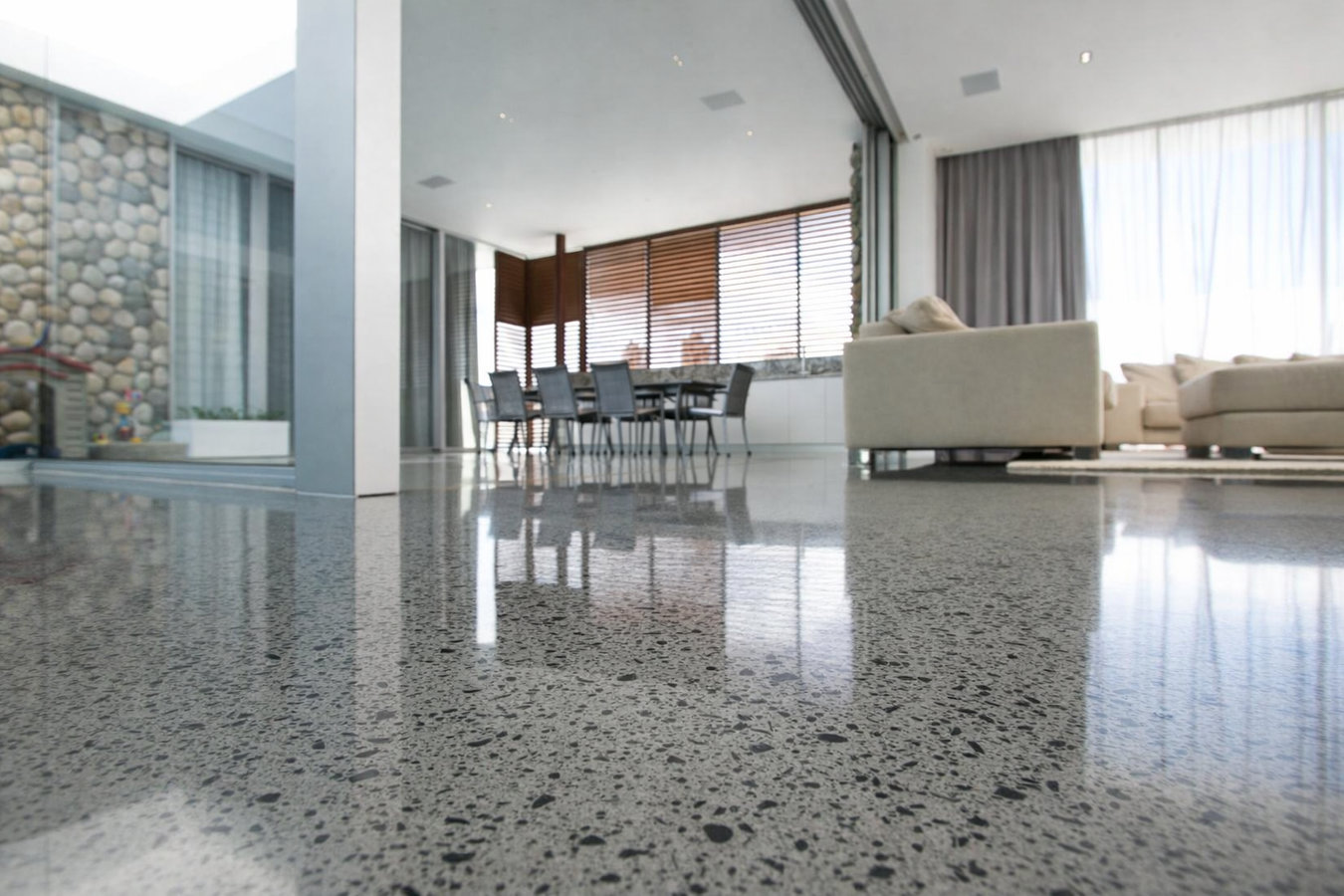
The finish matters too. A broom finish is right for garages and storage areas. A smooth trowel finish suits workshops. For basements being converted into living space, a polished or sealed surface can completely change how the room feels. After a new floor is in, many homeowners move on to related projects - a concrete pool deck in the backyard or a refreshed garage floor with a protective coating are both natural follow-ons once the foundation work is done.
For Woonsocket's older homes with failing original slabs - old concrete removed, ground properly prepped, new pour with moisture barrier.
Poured at the right thickness to handle vehicle weight, with a broom or trowel finish and optional protective coating for road salt resistance.
New floors for laundry rooms, home additions, or converted spaces - properly leveled and finished for the intended use.
Poured flat and smooth for basements being converted to living space, with a vapor barrier and a finish that works under laminate, tile, or carpet.
Woonsocket's older housing stock - much of it built before 1940 for mill workers - means a large share of the city's homes have original basement slabs that were poured thin, without a proper gravel base, and without any moisture management underneath. Rhode Island's humid summers and wet springs make moisture a persistent issue in these older slabs. Parts of the city near the Blackstone River and its tributaries also sit on fill or softer soils that can shift over time, which is one reason why proper subgrade preparation matters here more than in places with more stable ground conditions. A new floor poured without addressing what is underneath it will develop the same problems within a few years.
We work throughout the Woonsocket area, including homeowners in Lincoln where older housing stock creates the same challenges, and in Pawtucket where mill-era homes with aging basement slabs are common. Rhode Island's building permit requirements for floor work are issued locally through the Woonsocket Building Inspection Department - we handle the permit application and city inspection for every project that requires one.
Contact us by phone or through the form and we will respond within one business day. We will ask a few basic questions about the space, then schedule a time to come look at it in person before giving you a firm price - the condition of what is already there changes the scope.
After the site visit you receive a written estimate breaking out prep work, materials, labor, and finishing separately. We will tell you clearly whether a permit is required and handle the application for you. Summer slots fill fast - booking in spring gives you the most flexibility.
If an old slab is being removed, the crew breaks it up and hauls it away - expect noise and dust for a day. Once it is out, the ground is graded, compacted, and a gravel base is added. In Woonsocket's older homes this sometimes reveals soft spots underneath that need to be addressed before the pour.
The pour moves fast - the crew spreads, levels, and finishes the surface before it begins to set, then cuts control joints before they leave. The floor is walkable in 24 to 48 hours. Keep heavy items off for at least a week. Once cured, a city inspector signs off on permitted work - we coordinate that step for you.
Free estimates, written quotes, no obligation. We respond within one business day.
(401) 356-6720A concrete floor is only as good as what is underneath it. We grade, compact, and add a proper gravel base before every pour - no shortcuts. In Woonsocket's older homes, this step sometimes reveals soft spots or buried debris that have to be addressed first. We do that work rather than pouring over a problem and hoping it holds.
Basement moisture is a persistent problem throughout Woonsocket, especially in neighborhoods near the Blackstone River where the water table runs higher. We install a polyethylene vapor barrier under every basement slab. It is not an optional add-on - it is what keeps your new floor from developing the same damp-floor problem you had with the old one.
A lot of our work in Woonsocket involves homes built before 1940, and we know what to expect under those floors - thin original slabs, no base preparation, sometimes buried rubble from previous renovations. Contractors who have not worked in older New England mill-city housing stock get surprised by those conditions. We do not.
Work done without a permit can create problems at sale time, and Woonsocket requires permits for most slab replacement and floor work in habitable spaces. We pull the required permits and schedule the city inspection on your behalf, so your project is fully documented. That record protects you now and makes your home easier to sell later.
Every floor we pour is built with the preparation and details that determine whether it lasts - proper subgrade work, a gravel base, moisture management, and the right thickness for the intended use. The National Ready Mixed Concrete Association publishes guidelines for concrete quality and installation practices that we follow on every job. When the work is done, your floor should look and perform the same five winters from now as it does on day one.
Poured concrete decks around in-ground pools that handle Rhode Island's freeze-thaw cycles without cracking or shifting.
Learn MoreGarage floors poured at the right thickness for vehicle weight, with finishes that resist road salt damage through New England winters.
Learn MoreSpring and summer slots fill fast in Woonsocket - request your free estimate now and lock in your place on the schedule.